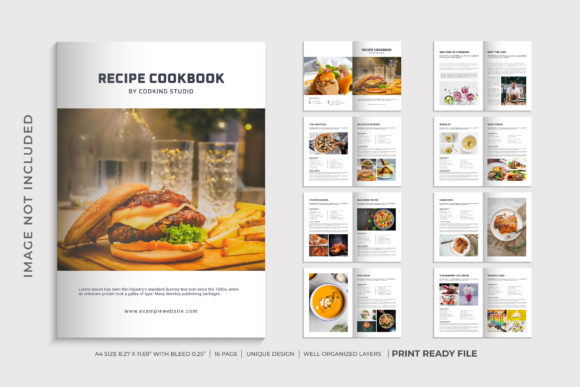
Recipe Cookbook Template: Design Your Culinary Brand
If you’ve ever tried to lay out a cookbook or a collection of family recipes, you know the struggle is real. It isn’t just about writing down ingredients and steps; it is about capturing the aroma of the kitchen in visual form. You need a layout that feels warm and inviting but remains functional enough to be read while covered in flour. That is exactly the gap this Recipe Cookbook Template fills. It isn’t just a set of pages; it is a complete design system built specifically for the culinary world, bridging the gap between amateur cooking notes and professional publishing.
The Anatomy of a Perfect Kitchen Layout
At first glance, the visual personality of this template strikes a balance between modern minimalism and cozy charm. It utilizes an A4 format size (8.27 x 11.69), which is the international standard for publications, giving you a familiar canvas that feels substantial in the hand. The design relies on a structured grid system that guides the eye naturally from the header down to the ingredients and finally to the method. This isn't accidental; it is premium quality brochure design that prioritizes user experience. The typography choices within the template are curated to create a clear visual hierarchy. Headings are bold and commanding, ensuring the recipe title stands out, while the body text is optimized for legibility. It avoids overly decorative scripts that might look pretty but fail when you actually try to read the instructions at a glance.
One of the most critical technical aspects here is the attention to print specifications. The file comes with 0.25 bleed and well-organized layers. For designers, this is a godsend. It means you don't have to spend hours restructuring the file to make it print-ready. The layers allow you to easily isolate background elements, swap out images, or adjust text blocks without breaking the layout. Whether you are using the AI or EPS version, the structural integrity remains intact, allowing for deep customization while maintaining the professional polish of the original design.
Who Needs This Template?
The versatility of the Recipe Cookbook Template makes it a vital asset for a wide range of creatives. It isn't just for professional chefs. If you are a food blogger looking to monetize your content, this template allows you to package your digital recipes into a tangible, sellable product. For marketers, it serves as an excellent foundation for brand-specific content marketing—imagine a bakery or a kitchenware brand producing a high-quality seasonal recipe book as a lead magnet or gift for loyal customers.
Entrepreneurs and small business owners in the food industry will find this particularly useful for brand identity work. A cohesive cookbook reinforces the visual language of your business. Because the template is 100% editable and uses only free fonts, you have the freedom to adapt it to your existing style guide without purchasing expensive typography licenses. It is also a fantastic tool for crafters and hobbyists. Perhaps you want to compile a family heritage book for a reunion or a wedding gift. Instead of starting from a blank page in a word processor, you start with a professional editorial design framework that elevates your content immediately.
Practical Guidance for Customization
Getting the most out of this design asset requires a thoughtful approach to customization. The template provides 16 custom page designs, which usually include variations for introductions, ingredient lists, step-by-step instructions, and full-page photography spreads. Don't treat these pages as rigid constraints. If you have a recipe that requires a long introduction, combine elements from a text-heavy page with the imagery from a photo-centric layout. The well-organized layers make this kind of mixing and matching seamless.
When it comes to font pairing, even though the template comes with a suggested type scheme, you should feel empowered to experiment. If your brand uses a specific sans serif font for headers, swap it in. If you prefer a script font for the title of a specific dessert chapter to add a touch of elegance, the AI and EPS versions allow for that flexibility. However, always prioritize readability. In packaging design and editorial design, function must follow form. Test your chosen fonts at the size they will be printed. A display font might look stunning on a poster but become illegible when shrunk down to caption size.
Furthermore, consider the commercial font implications. Since this product explicitly states the use of free fonts, you are safe from the legal gray areas that often plague graphic design projects. This is a massive advantage for publishers and businesses planning to distribute the final product. You can confidently sell your cookbook or use it in social media graphics without worrying about licensing infringements. It is a premium font experience without the recurring legal headaches.
Beyond the Recipe Book: Diverse Applications
While the name suggests a singular focus, the utility of the Recipe Cookbook Template extends into broader web design and marketing applications. The layout structure is essentially a brochure design, which means it can be repurposed for various digital and print needs. For instance, a wellness coach could adapt the template to create a "Lifestyle Guide" or a "Meal Plan" PDF. The grid system that works for ingredients and steps also works perfectly for workout routines or daily schedules.
In the realm of digital content, the pages can be sliced and repurposed for social media graphics. A single page from the 16-page spread can be exported as an image for an Instagram carousel or a Pinterest pin. The modern typography and clean layout ensure that these graphics look native to the platform rather than looking like a scanned document. For small business owners, this adaptability means you aren't just buying a cookbook template; you are buying a versatile content management system for your food-related visual assets.
Ultimately, the Recipe Cookbook Template is about removing barriers between your ideas and a professional final product. It handles the heavy lifting of modern typography and layout structure, allowing you to focus on what you do best—creating, cooking, and sharing. Whether you are a designer looking to speed up your workflow or a hobbyist wanting to preserve your culinary legacy, this tool provides the structure, flexibility, and premium quality needed to make your vision a reality. It is a practical, high-quality solution for anyone serious about their brand identity in the culinary space.